A small glass of olive oil, poured on deck, is smelled before it's dipped into bread. Then it's taken in, not as a gulp, but as a slow walk across the tongue. And right as you swallow, you feel a faint burn at the back of your throat — too light to make you cough, but not so light you'd miss it. Most people, tasting it for the first time, assume something's wrong. It isn't. If anything, it's the signature of a good oil.
That sensation turns up often in oil from the Milas groves — just inland from Bodrum, in the hills behind Güllük Bay.
Trees That Are Never Watered
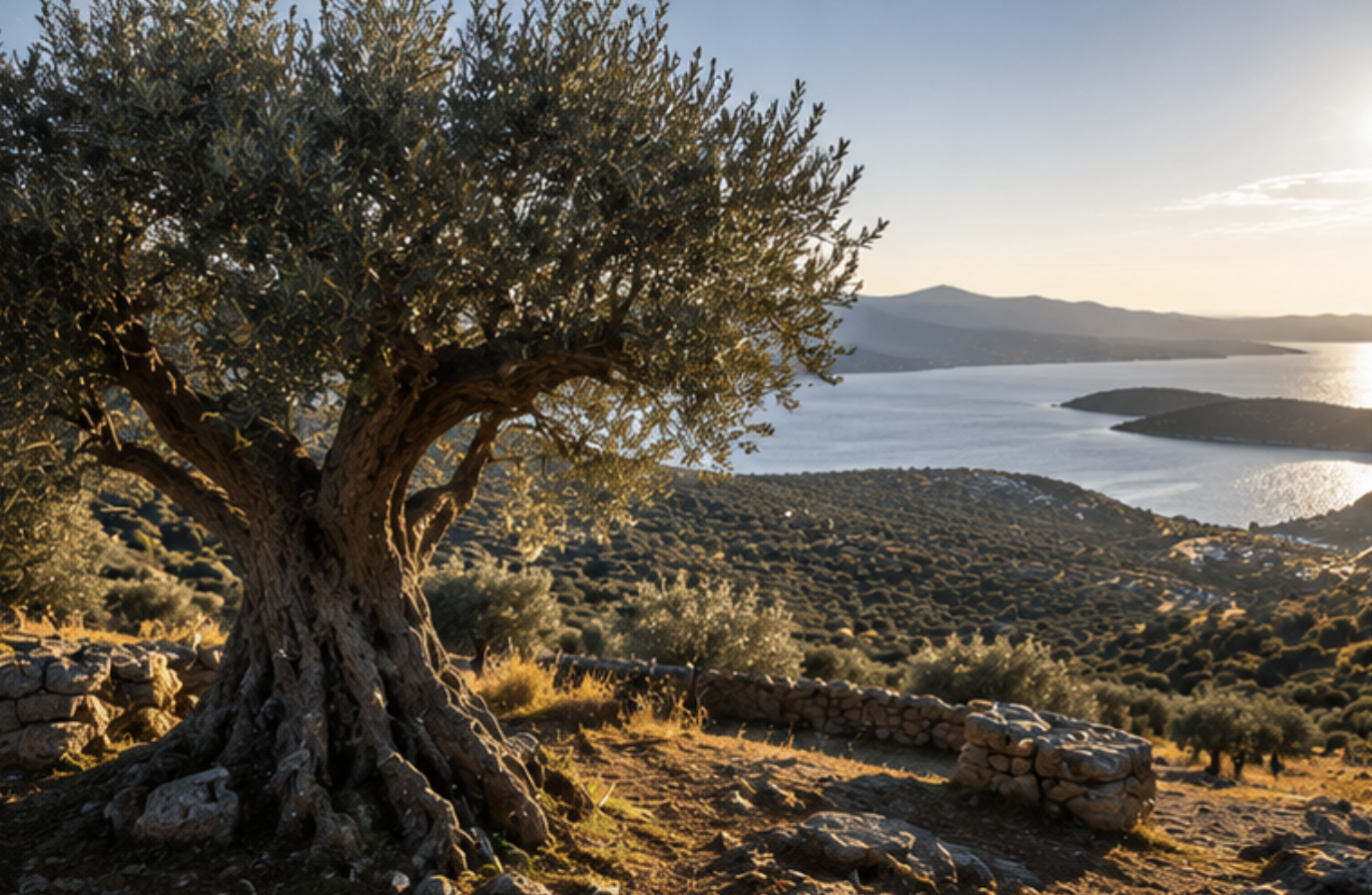
Roughly a quarter of Milas district is covered in olive groves; there are more than thirteen million trees, some said to be 3,200 years old. Because the land here is mountainous and dry, these trees are never irrigated — they live on rainfall alone, and whatever moisture their roots can reach underground. The hardship turned, almost by accident, into a virtue: an olive grown without water gives fruit with lower acidity and higher polyphenol content. In 2020 the European Union registered "Milas Zeytinyağı" as a protected geographical indication — the fifth Turkish product to earn the title.
Early Harvest, Cold Press
The second secret behind the oil's quality is timing. In Milas, the Memecik olive is picked early, while the fruit is still green, and pressed cold as soon as possible afterward — no waiting. Every hour of delay blunts the flavour a little more. That's why, during harvest, the local presses start running in the early morning; olives picked at dawn need to be pressed before noon. Records show that for centuries, Istanbul drew much of its olive oil from this very district — this isn't a new trend. It's an old habit.
Boats stopping for a day near Güllük Bay, south of Bodrum, can knock on the door of a small producer in the villages behind the bay; some will invite a guest in to taste, others will simply hand over a bottle. Either way, carry that bottle back to the deck, and you're carrying, in effect, a three-thousand-year-old tree's patience for that particular year.
ATLAS BY OXYGEN →