CONTACT HOME
"Beyond the Reach of Noise."

LEAD

The Potter’s Name: Keramos and the Memory of a Gulf

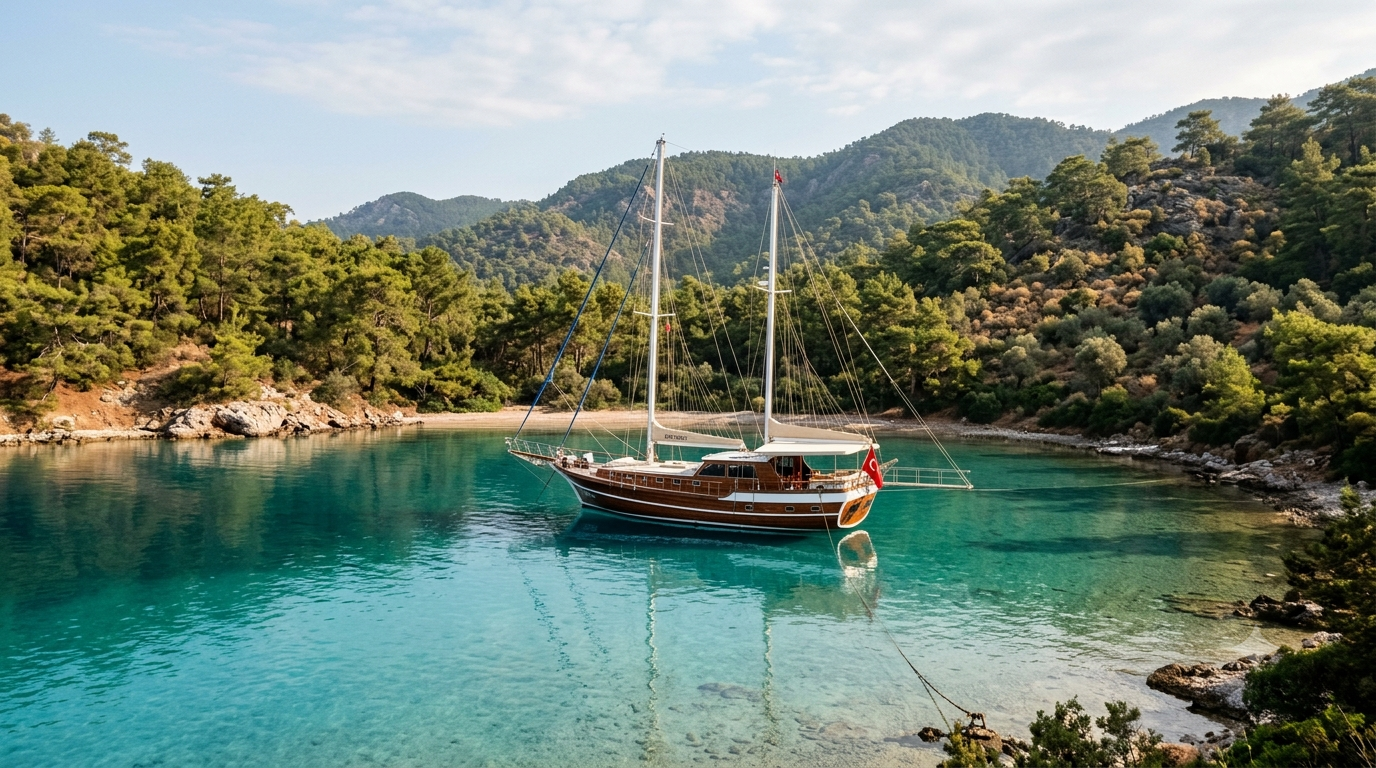
Almost every boat entering Gökova turns south. On the far shore, under the pines, lie the stones of a city that once gave the whole gulf its name — a name that may come not from a legend but from a word.

Waking at anchor off Ören at half past six means seeing the other face of Gökova. The sea lies flat; across the water the spine of the Datça peninsula is still blue, still cool. A mixed smell comes off the land: pine resin, a little fig leaf, a little watered earth. When the chain comes taut the sound is different from the one it made in the night — shorter, fuller.

There are few boats on this shore. Most routes turn south the moment they enter the gulf.

Continue Reading
Gökova körfezinin kuzey kıyısında, Ören açıklarında sabah ışığı

INDUSTRY NEWS
MARKET
Mid-Season: The Arithmetic of Asking Late
In the last week of July the office is cool and the phone rings often. The question is nearly always the same: a boat for eight, for next week. On the other end there is goodwill, a plan, and usually a long journey already booked. On our end there is a list, and that list is far shorter than the one we had in January.
Read More
GLOBAL MARKET
Short Charters, Long Trend: What Is Shifting in the World Market
In winter, on the desk of a boat owner in Bodrum, there are usually two sheets of paper: the maintenance list and last year’s occupancy chart. Both ask the same question from different directions. He drinks his tea, looks at the chart, then out of the window. Outside is the quay in winter — lines slack, decks covered, a single gull.
Read More
MARINE INDUSTRY
To Own or to Charter: Two Paths on the Water
The question usually arrives around the third or fourth charter. The guest knows the route by now, knows the boat, trades jokes with the captain; then one evening on deck, glass in hand, they ask quietly: "What would it be like if this boat were mine?" It sounds like an innocent question. Behind it stand two different ways of living, two different shapes of responsibility.
Read More
MORE
BOATS & TECHNICAL
Water Aboard: The Quiet Arithmetic of a Week
On the morning of departure, one of the last jobs at the quay is water. The hose comes aboard, the deck fitting opens, and a hollow sound rises from below — as the tank fills the note thins out; the man filling listens to that note rather than watching a clock. The deck gets wet and dries quickly. Nobody photographs this part.
Read More
CULTURE
What Sailors Know About Seasickness
Somewhere mid-passage, a guest goes quiet. First they stop joining the jokes, then their colour fades, then they want to go below. That's exactly the moment an experienced captain, without asking anything, calls them back up on deck. "Don't stay down there," they say. "Come up, look at the horizon." It's a line most sailors have repeated many times over and almost never written down.
Read More
CULTURE
What Sailors Know About Seasickness
Somewhere mid-passage, a guest goes quiet. First they stop joining the jokes, then their colour fades, then they want to go below. That's exactly the moment an experienced captain, without asking anything, calls them back up on deck. "Don't stay down there," they say. "Come up, look at the horizon." It's a line most sailors have repeated many times over and almost never written down.
Read More
AKDENİZ VE EGE TARİHİNDE CHRONICLES
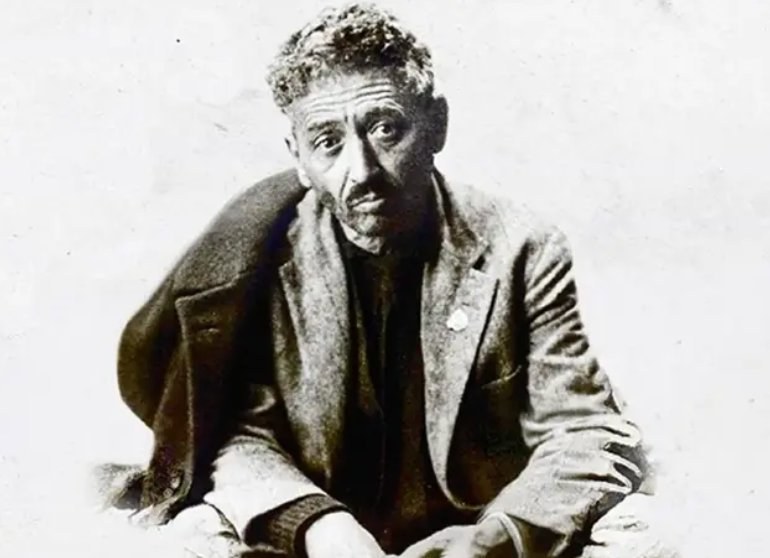
Neyzen Tevfik
CHRONICLE I
Neyzen Tevfik
Bodrum 1879 — Istanbul 1953

At age seven, the sound of the ney flute heard in a Bodrum coffeehouse never let him go. This child raised in the Aegean's embrace became at once mad and holy, anarchist and philosopher.

Read the Story
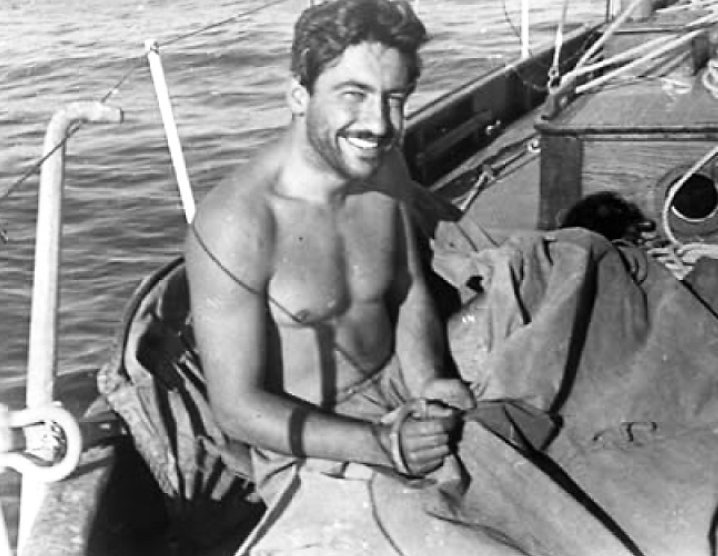
Sadun Boro
CHRONICLE II
Sadun Boro
Istanbul 1928 — Bodrum 2015

He cashed in his pension, sold everything at home. Built the 10.5-metre Kısmet with his own hands. In 1965, with his wife Oda and his cat Miço, he carried the Turkish flag around the world on a sailboat for the first time.

Read the Story
Halikarnas Balıkçısı
CHRONICLE III
Halikarnas Balıkçısı
Crete 1890 — Izmir 1973

When he took his first step into the Bodrum he'd been exiled to, he drew buckets of water from a well and threw them around — with joy. That day, Cevat Şakir became the Fisherman of Halicarnassus.

Read the Story
01
The Night Watch: What a Boat Sounds Like in the Dark

While the guests sleep, someone on deck is awake. The work is not watching but listening — and most of what is heard is never seen.


At three in the morning a cove is a different place. Things you don’t hear in daylight come through: the rhythm of the crickets ashore, a generator somewhere far off, a small slap of water against the topsides. Then that slapping changes. The intervals shorten. The man on watch lifts his head.

It isn’t the weather that has changed yet. It’s the direction.

FULL ARTICLE →
02
The Meadow No One Sees: The Rules of an Unseen Forest

Under the water, in a place few people look closely, a green meadow stretches out — in some spots, it has for thousands of years. Local fishermen call it erişte, noodle-grass. Science calls it Posidonia oceanica. And in precisely the waters where Oxygen drops anchor, this meadow now sits among the most pressured stretches in the Mediterranean.


Entering a cove, a good captain slows down, moves to the bow, and reads the colour of the water. Deep navy means depth; pale turquoise means sand; a dark, almost black-green means something else. The captain lets that patch go, drifts a few metres further, and only then lets the anchor down. Guests sometimes ask why not there instead of here. The answer is usually short: "That's erişte."

The local name comes from the shape of the leaf — thin, long, genuinely close to a plate of noodles. But what they call noodle-grass is, in fact, one of the most patient living things in the Mediterranean.

FULL ARTICLE →
03
Before the Storm: What the Sea Tells You First

Even while the sea still looks flat, a storm has usually been saying something for hours already. For a captain who knows how to read the sky, the water and the birds, even silence is a warning.


Mid-afternoon, the sea like glass. Guests sunbathing, someone playing something on a guitar. The captain, though, has been looking at the horizon alone for a while, then quietly takes the helm and adjusts the course. No one notices, but three hours later, instead of the cove that was on the plan, you're already anchored in a sheltered harbour somewhere else. Ask, and the captain just shrugs: "The sky said so."

The first sign of a storm is almost never the wind — it's the sky. Thin, wispy high clouds, the pattern some captains call a "sheep's-wool sky," usually appear a day ahead of anything else. A faint ring around the sun or moon is another old sign; grandmothers used to read it as "rain is close," and sailors say much the same thing, just with less poetry. If the horizon line looks unusually sharp, or unusually blurred, that too means something is shifting overhead.

FULL ARTICLE →
ALSO
Trakheia: The Quiet Road to Bozburun FULL ARTICLE →
FESTIVAL
Played on Stone: A Quarry and a Festival at Gümüşlük

Bodrum’s stone once came out of here. Now a piano is played among the cut faces — and nobody designed the acoustics.


Evening comes down slowly at Gümüşlük. Even after the sun has gone behind the island the air stays orange for a while, then turns blue all at once. On the path to the quarry there is loose stone underfoot; stepping inside, the first thing you meet is the cool — after a shoreline that has been warming all day, the shade of cut rock holds a different temperature altogether. The chairs are set out. The piano waits in front of a flat face that somebody left with a chisel two thousand years ago.

Then someone begins to play, and the sound goes to the wall and comes back.

CONTINUE READING →
GASTRONOMY
The Season of the Fish: What the Slab Holds in Summer

Asking for fish in summer puts the man behind the slab in a slightly difficult position. His answer isn’t rude, only honest: “This month, so-so.” The sea keeps its own calendar.

CONTINUE →
GASTRONOMY
Olive and Oil: The Aegean's Liquid Memory

Just inland from Bodrum, olive groves grow without ever being watered — some of the trees said to be 3,200 years old. The oil they produce leaves a faint burn at the back of the throat. That's not a flaw. The European Union has registered the name to prove it.

CONTINUE →
CULTURE
Ziya Usta's Legacy: The Coves Where a Gulet Is Born

The gulet you're sleeping aboard tonight is likely part of a lineage. Bodrum's first gulet was born in 1958 as a fishing boat; the master who built it trained apprentices who trained apprentices of their own. The craft still passes from hand to hand, in the same coves.

CONTINUE →
"

Whether choppy or still... You have no idea how beautiful the seas are.

HALIKARNAS BALIKÇISI · Cevat Şakir Kabaağaçlı
"

The sea is such a rough lover — the moment you neglect or disrespect it, you'll find its slap across your face.

SADUN BORO · Pupa Yelken, 1968
"

That night, in the immortal setting of the Aegean, the divine sound I heard made me Neyzen Tevfik.

NEYZEN TEVFİK · Kolaylı, Bodrum 1879
"

The cure for anything is salt water: sweat, tears, or the sea.

ISAK DINESEN · Karen Blixen, 1934
"

A world voyage in a small sailing boat, despite all precautions and knowledge, remains a matter of fate — of kısmet.

SADUN BORO · Kısmet ile Dünya Turu
"

The sea is everything. It covers seven tenths of the terrestrial globe. Its breath is pure and healthy.

JULES VERNE · Denizler Altında Yirmi Bin Fersah, 1870
"

All my life I searched for freedom; and whenever I thought I'd found it, they either seized it or stole it away.

NEYZEN TEVFİK · Kolaylı
"

There is nothing more enticing, disenchanting, and enslaving than the life at sea.

JOSEPH CONRAD · Lord Jim, 1900