At three in the morning a cove is a different place. Things you don’t hear in daylight come through: the rhythm of the crickets ashore, a generator somewhere far off, a small slap of water against the topsides. Then that slapping changes. The intervals shorten. The man on watch lifts his head.
It isn’t the weather that has changed yet. It’s the direction.
What the chain says
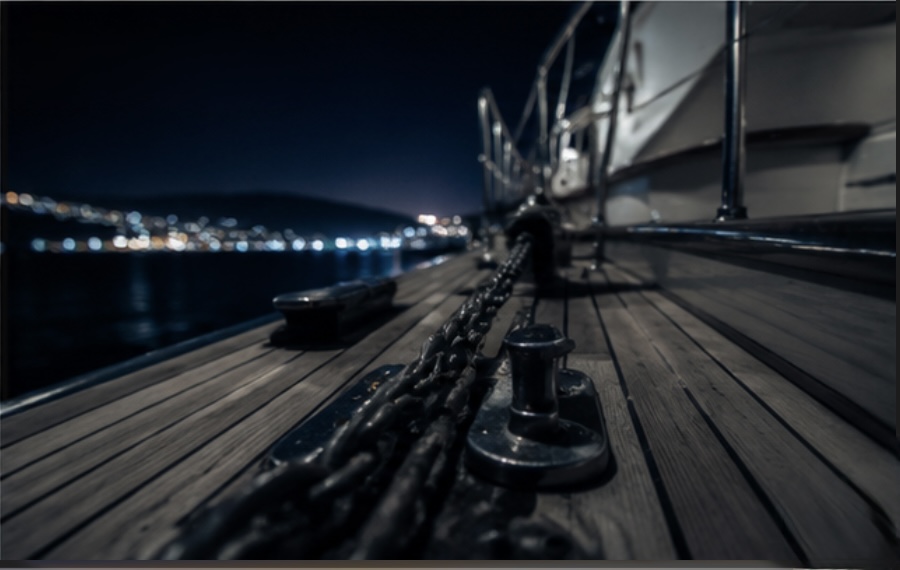
On a boat lying at anchor, most of the information comes up the chain. Taut, it is silent; slack, it gives a short knock at the bow roller; dragging, it loses its rhythm altogether and turns gritty and irregular. Experienced crew hear this before they look at a screen. The screen comes second anyway: the anchor alarm gets set, but nobody who sleeps trusting the alarm sleeps well.
Summer nights in the Aegean usually pass quietly. Usually. The meltem drops around sunset, but inside a cove a wind can slide down off the land — from the opposite side — and turn the boat around at midnight. Once she has turned, the anchor is no longer being pulled from the direction it was set in. Most dragging comes out of that turn rather than out of any real strength of wind.
How a watch is kept
A good night watch begins at dinner: who wakes at what hour, what the forecast holds, whether we are stern-to, how the lines are bearing. Deck lights go off — partly so eyes adjust, partly out of respect for the boat next door. A torch lives in the same place, always. Tea gets brewed, and again towards dawn.
Sometimes nothing happens. Most nights nothing happens. That is the nature of the job.
For a guest the result is simple: in the morning the boat is where she was, and nobody tells you what the night was like. That is part of the measure of good seamanship — that there is nothing left to report.
At six the man on watch puts out his cigarette and goes below for coffee. The chain is still taut.
YACHT MANAGEMENT →