In the autumn of 1900, off a small island in the southern Aegean, a party of sponge divers sheltered behind a headland to ride out a storm. When the weather cleared, one of them pulled on his diving suit and went down; he was looking for sponges, but forty metres deep he found something else. In the dark he made out first a hand, then a face, then a horse — bronze and marble statues scattered across the bottom. He surfaced barely able to speak. A ship had gone down there, two thousand years before; and the sea had kept its cargo all that time.
Among the statues was one more thing no one thought to look at twice: a lump of bronze the size of a palm, gone green, cracked through.
They Took It for a Stone
When that piece of bronze was carried up to the museum, it sat off to one side for a long while. A stone, a crust, an unimportant fragment — so they assumed. Then it dried and split, and the thing inside showed itself: gears. Dozens of bronze gears, meshed together, precisely cut. Nothing like it had ever come out of the ancient world. It would be more than a thousand years before anyone made a gearwork this fine again, in the astronomical clocks of the Middle Ages. And yet here it was, already at the bottom of the sea — from the age of the Romans, out of the hold of a cargo ship.
Today we call it the Antikythera Mechanism, after the island it was found near. Working out what it did took a century, and the help of X-rays.
A Sky You Could Hold
Turn its wheels, and the machine reckoned the heavens. On one face it showed the place of the Sun and the Moon in the sky, turning the Moon's phases with a small sphere. On the back, calendars revolved: cycles reconciling the lunar and solar years, a dial that foretold when eclipses would come, even a ring marking the year each of the ancient games — the Olympics among them — would be held. Someone, in the second century BC, had sat down and translated the slow, orderly motion of the sky into bronze gears. Sailors who read the stars already did this in their heads; this machine made that knowledge something you could hold in your hands.
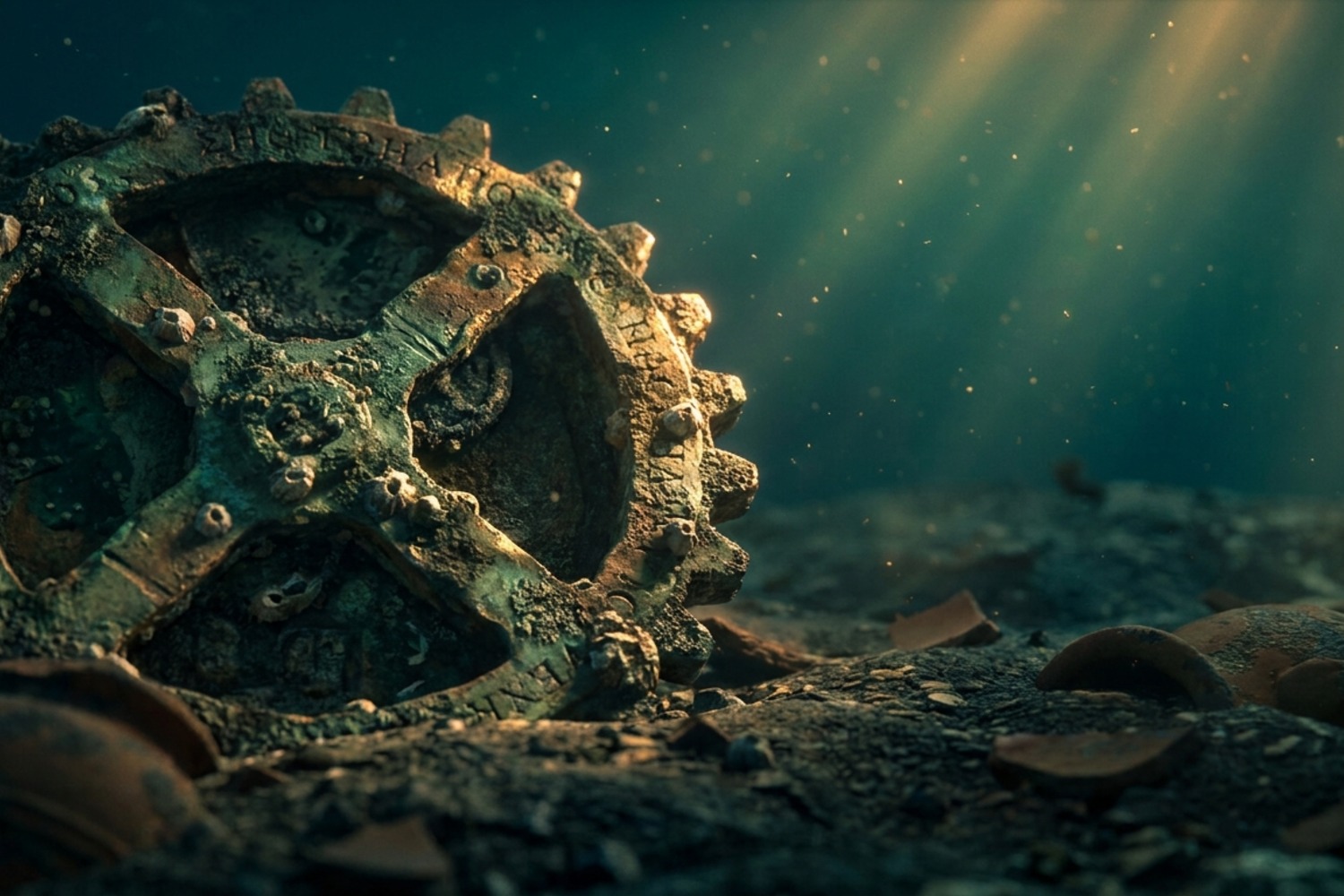
The sea's part in this story is no accident. The floor of the Aegean and the Mediterranean is filled with the cargo of sunken ships; in a sense, this sea keeps its own history beneath itself. In Bodrum, the cargo of ships that once went down in these waters is shown in the cool stone rooms of the Museum of Underwater Archaeology. That the finders of Antikythera were sponge divers means something too: for centuries the memory of these coasts was carried not by archives ashore, but by people who held their breath and went down.
For a charter guest, this is no distant museum case. When you tip your head back one night at anchor and see the Moon rise by the same road it always takes, you are looking at the very thing that machine measured. Two thousand years ago someone worked that order into bronze gears; tonight you read it with the naked eye, from the surface of the same sea.
When the ship went down, the gears stopped turning. But the sky did not — and it still turns, every evening, over the cove, with the same patience.
DAY CHARTERS →