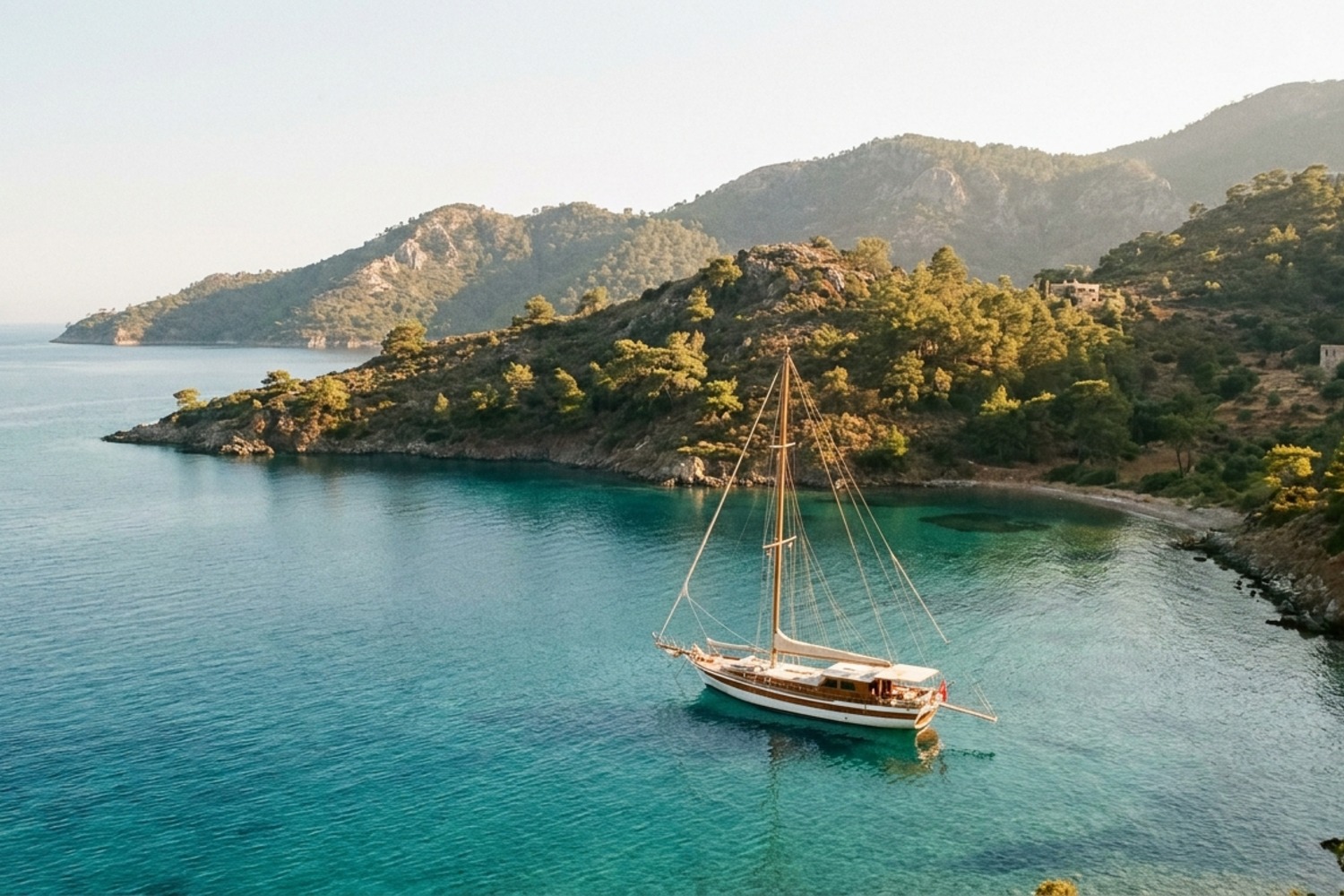
Toward the end of August something in the cove changes. The water is still warm — in fact at its warmest of the year, because the sea heats late and cools late. But the late-afternoon light comes in level now rather than straight down; the shade of the pines lengthens, and the air cools a little earlier. The meltem that blows hard in the afternoon begins, day by day, to soften. And one morning you look up and the cove that held three rows of boats yesterday has only two today. The crowd withdraws as quietly as it came.
Those who know the sea wait for these weeks. It's no accident.
Why the End of the Season?
There are a few reasons, all of them unshowy. The sea is at its warmest in September; it has heated all summer, and going in is more inviting than in July. The meltem, that familiar afternoon wind, drops toward the season's end; the sailing is calmer, the coves stiller. As the crowd withdraws, the anchorages open up, even the narrowest coves become easy to enter, and the tables lose their hurry. And there's the calendar's own rhythm: with schools starting and work resuming, demand falls, and falling demand means both more room and a more flexible choice. In the Aegean, the moment people call "the season's over" is often the sea's most balanced moment.
The Calendar of Those Who Know
There's an old rule in yachting: the best week isn't the week everyone goes. Mid-July and August are the named, headline period, when everyone takes to the sea at once; demand is high, the coves are full, the pace is high. The two ends of the season — early June and late September — belong more to those who want the sea for its own sake. So experienced charter guests often choose their dates not by the crowd but by the temper of the sea. The same route runs to an altogether different rhythm in September; the same cove, half empty, is another cove.
For a charter guest, the meaning of this is a simple matter of preference. Do you want to set out at the season's peak, or at its ripened end? The first is lively and full; the second is calm, warm, and selective. Good planning, when it picks the date right, cuts the weight of a route in half — because an empty cove gives more ease than even the finest design.
September comes, and the cove grows quiet. The sea is still mild, the light is gold, and the meltem blows only a few midday hours, for old times' sake. They say the season is ending; but by the sea's own reckoning, it's just coming into its own.
ROUTE DESIGN →