Somewhere in the night, while everyone sleeps, there's a footstep on deck. The captain is up. He lights no lamp; he looks around with an eye used to the dark. He tests the wind's direction against his cheek, checks the tension of the chain not with his hand but with his ear — a boat makes a certain sound when the anchor holds, and another when it changes. Is the top of that pine ashore swaying a little too much? Is the light on the far headland where it was this evening? He watches a few minutes, then goes below. No one knows he was up. In the morning no one asks. But he rose twice in the night.
This is the untold side of command: it works hardest in the moments no one sees.
A Responsibility That Doesn't Sleep
On a boat the captain carries several things at once. The safety of the guests, which stands above all the rest. The order of the crew. The boat the owner has entrusted to him. And the weather — a constant reading turning in the background. Most work ashore ends when the shift ends; a captain's does not. Even after the anchor is down, one corner of his mind stays open: will the wind back round, will the bottom keep holding, will something change in the night. This is why experienced captains sleep differently — lightly, half-awake; the smallest change in the boat's sound wakes them. Their tiredness comes from here, and that tiredness is usually invisible.
Calm Is a Service
Perhaps a good captain's hardest task is governing his own face. Because aboard, alarm is contagious; the slightest tightness in the captain's brow spreads through the whole boat in seconds. So he learns to stay calm on the outside even while a calculation is running within. This isn't a trick; it's a kind of professional discipline. In the moments he's genuinely worried, his voice slows further, his movements grow more measured. The guest reads this as "what a calm man"; what he's actually seeing is a mind that has learned, over years, how to carry the small fears it has stored up. A captain's calm is the invisible half of the service he offers.
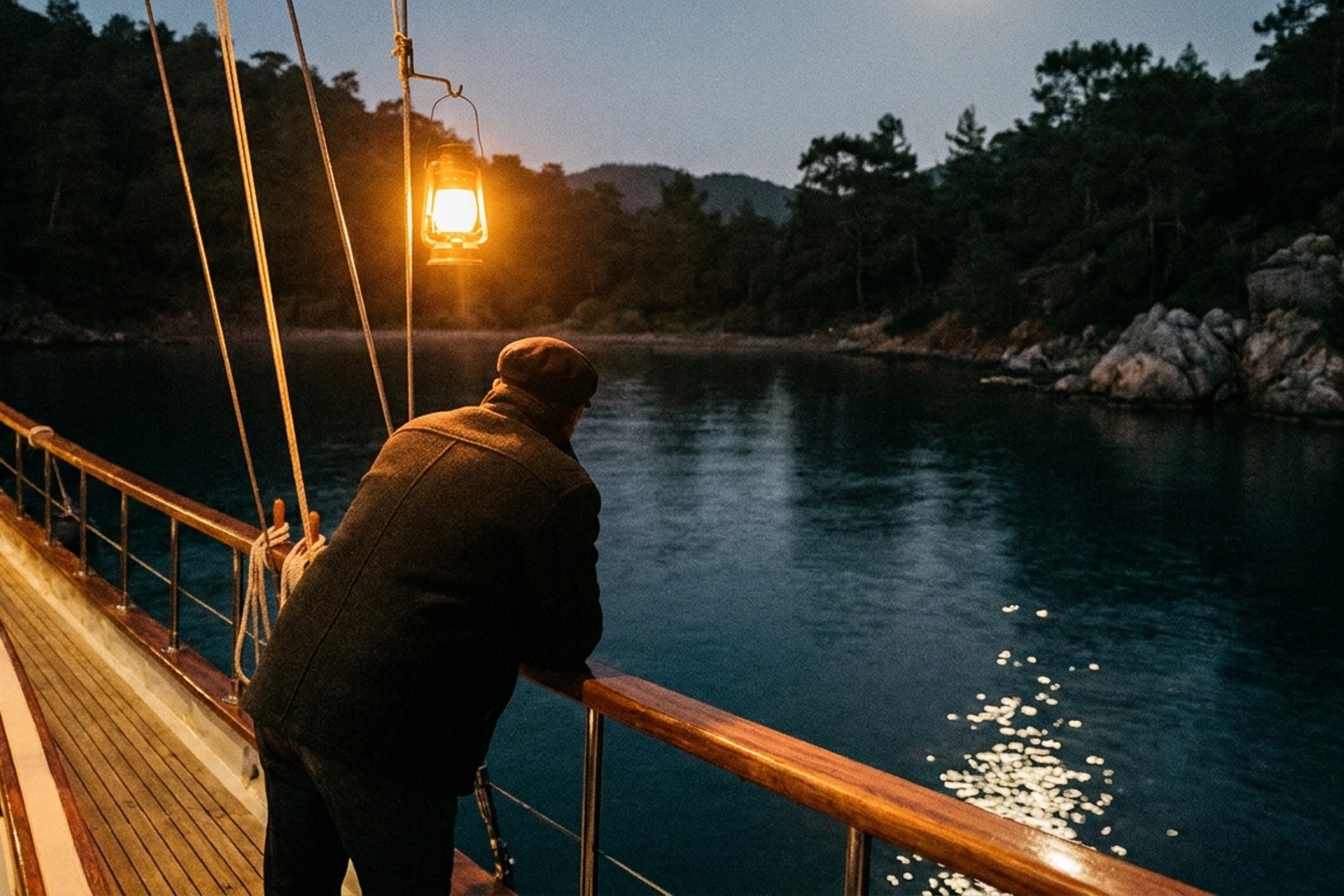
And then there's the loneliness of the decision. When the weather begins to turn — to move or to wait, which cove to run for, when to set out — the answer to these questions rests, in the end, on one person's shoulders. He consults, he listens, but he says the last word; and if it's wrong, he pays for it first. What makes a good captain good isn't fearlessness; it's being able to feel the right fear at the right moment. At sea, courage is often knowing how to say "let's not go out today."
For a charter guest, the meaning of this is subtle but real. That loosening you feel on deck, that sense of "all is well," doesn't arrive on its own; it comes from someone rising twice in the night, governing his face, saying "let's wait" at the right moment. Good yacht management knows this too: it sees the captain not as a lone hero but as a person who needs rest, support, and the right crew around him. Because a tired captain is the most expensive risk of all.
In the morning the guest comes up on deck, looks at the sea, and says "I slept so well." The captain hands over the tea and smiles. He doesn't mention that he rose twice in the night. It isn't a thing that needs saying.
YACHT MANAGEMENT →