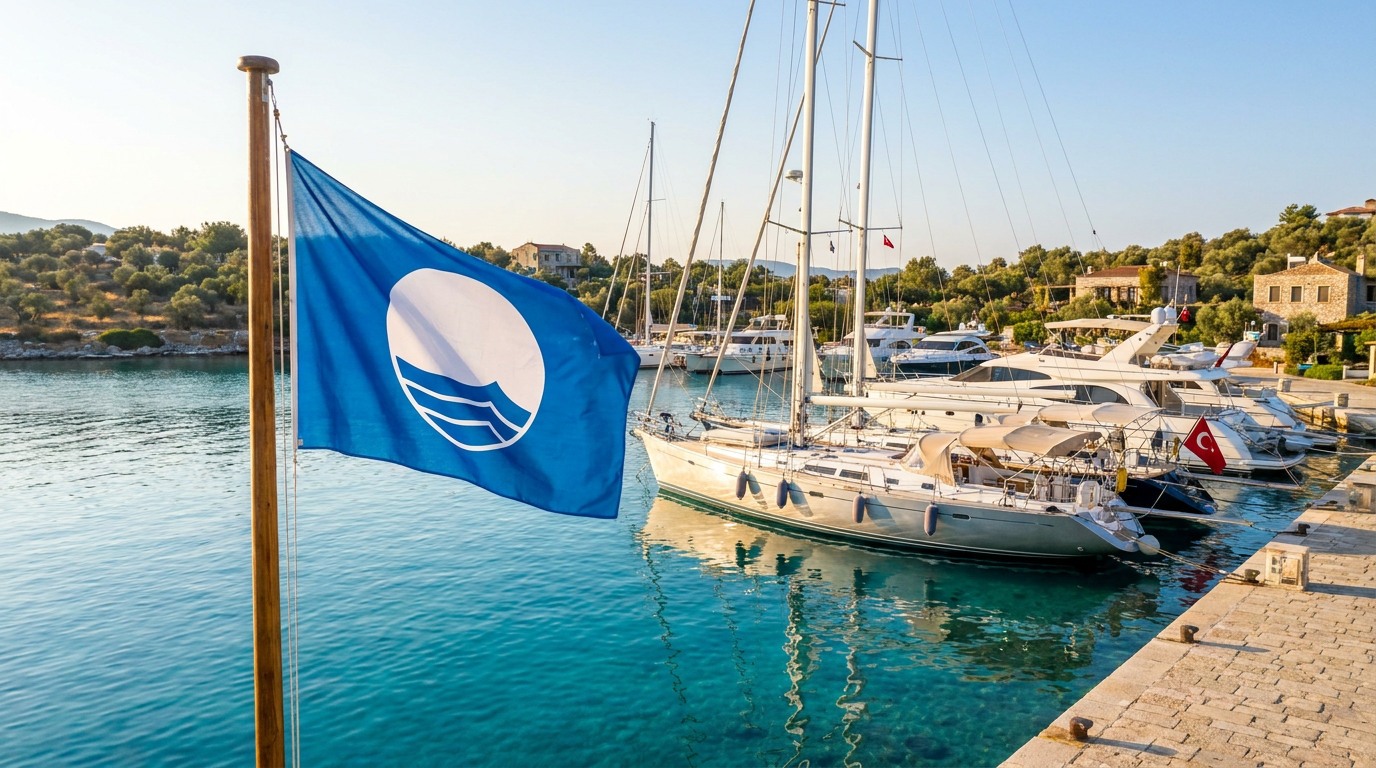
Come into a marina early in the morning and at first you don't notice it. The blue cloth on the mast doesn't even stir when there's no wind; it just stands there. But behind that flag is an unseen routine: the water measured regularly, the waste collected, the showers running, the lifebuoy in its place. The flag is a short sign that all of this has been done, without a break, for a year. It tells you even when it isn't flying.
The Blue Flag is an international environmental award, given separately to beaches, marinas and boats. It's earned when a set of standards is met — from water quality to safety, from waste management to public information — and withdrawn when they aren't. So it isn't a thing you win once and put on a shelf; it's a promise that must be earned again each season.
The 2026 Picture
On this year's list Turkey remained near the very top worldwide. The figures run like this: around 580 beaches, 30 marinas, some eighteen tourism vessels and twenty-six individual yachts carry a Blue Flag. The marina and yacht side is the part that touches our work directly; because how the place a boat ties up to takes its waste, handles its grey water and delivers its fuel decides how that coast will look the next summer.
The size of the number alone says little. What matters is continuity: the same marina keeping the flag year after year tells you more than a single season's success. It's the same at sea; a well-kept boat doesn't show it in a day, it shows it at the end of a season.
What It Means for the Guest
For a charter guest this list isn't a billboard but a practical guide. Whether the marina you'll berth at, the beach cove you'll enter, carries a flag tells you something — from the clarity of the water to safety. But on the Oxygen side we'd add this: if the flag isn't up, it doesn't mean the coast is poor; it may only mean no record was kept. Much at sea is known without being measured; still, what is measured is easier to protect.
There's an unseen side to this too. If every boat leaves the cove it anchored in the way it found it, it has done a little of the work behind that blue cloth itself. The list looks like the business of the state, the operator, the inspector; but it is really the shared ledger of everyone who uses the water.
At the end of the season the flags come down and the list carries over to the next year. What remains isn't only a number: a stretch of water that stayed clean through one summer waits quietly for whoever will enter the same cove the next.
PRIVATE CHARTER →