Past midnight the sounds of the boat grow plain. The breathing of those asleep below, the soft creak of a line, now and then the chain shifting on the bottom. The one on watch sits in the dark with a cup of tea; the steam reaches the face, the hands stay warm. An eye on a light at the horizon, an ear on the wind changing direction. Nothing happens, most nights. But that is exactly what should happen.
Because the work of the night watch is to keep something from happening, not to make it happen.
What You Watch at Anchor
Even anchored in a cove, the night does not pass without a keeper. The first thing the one on watch looks at is whether the boat is holding its place: when the wind turns, the anchor can drag, and the boat slide slowly toward the shore or toward the boat alongside. To sense this, skippers trust an old method — holding two fixed points ashore, a light, a jut of rock, in line at eye level; if the angle between them changes, the boat is walking. Screens do this now too, but the experienced sailor does not trust the screen entirely, and lifts their head to look with their own eye. The wind's rise, the swing of neighboring boats, the direction of cloud overhead — all are read at once. Some say you cannot truly know a good anchor hold until you have tested it until morning. The night watch is the sentinel of that test.
The Watch Under Way
If the boat is moving by night, the work turns wholly serious. Then the watch is divided into shifts — usually changing every few hours, because a sleepless eye begins to err in the third hour of the night. The one on watch scans the horizon and reads the navigation lights of other boats: red to port, green to starboard, and from the angle between works out where a vessel is going. Fishing boats' lights can deceive, net buoys show late on radar; and so a night passage asks for more attention, less talk, than the day. At the change of watch two sailors stand side by side a few minutes: what the wind is doing, which boat is where, what the course is. Then one goes below, the other stays. The handover is a small but sacred ceremony at sea.
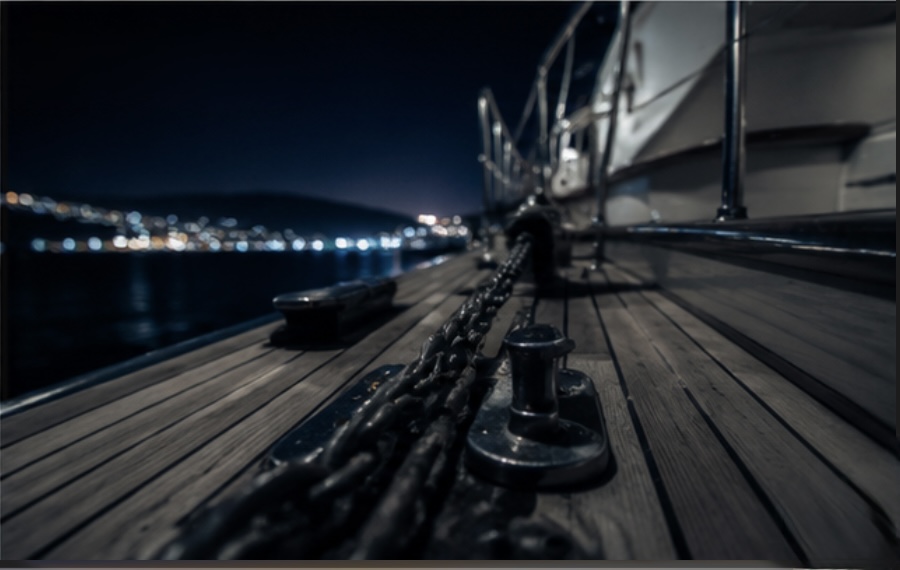
The guest, most of the time, knows none of this. They wake in the morning, the sea is calm, breakfast is ready, the boat is in the morning's cove — as though the night had passed on its own. But it did not; someone carried it through. Sleep this easy comes of someone not sleeping. Safety at sea is not a loud thing; when it works best, it goes wholly unnoticed. Perhaps what to trust most on a boat is not the one who says good night to you in the morning, but the one who stayed awake all night in your place.
As dawn breaks the watch ends. The sky goes grey along the coastline first, then opens; with the first gull the keeper drinks the last of the tea. Below, no one has stirred. And for exactly that reason, the night went well.
PRIVATE CHARTER →