Step into a cove in early September: the same cove that carried music until dawn in August is another thing now. A few boats at anchor, wide gaps between them. The water is still warm — a sea heated all summer lets go of its warmth later than the land does — but the air above it is a little cool at dawn. The noon sun still burns; the evening comes down early and soft. The cove's sound has changed: fewer engines, calmer water, lower voices.
This isn't the moment the season ends. Only the moment the crowd draws back.
The Warmth the Sea Gives Back Late
The logic of the water is simple: the sea heats more slowly than the land and cools more slowly too. So in the Aegean the warmest sea usually doesn't fall on the same day as the warmest air; the water gives back through September the heat it gathered in August. For swimming, most years September is no worse than July; sometimes it's better. The meltem, too, softens its temper in these months: that stubborn mid-summer afternoon wind grows less frequent, the passage calmer, the anchoring easier.
The Same Sea, Fewer Boats
The economic side follows from this. Demand peaks in mid-August; once schools open, families return and the coves empty out. The same boat, the same route, the same sea — but fewer people around it, and often a softer price. If you happen to ask a captain, he'll tell you why most of them save their own holiday for September: to sail in the quiet, not in the crowd. It's an arithmetic the industry doesn't say too loudly, but everyone on the inside knows it.
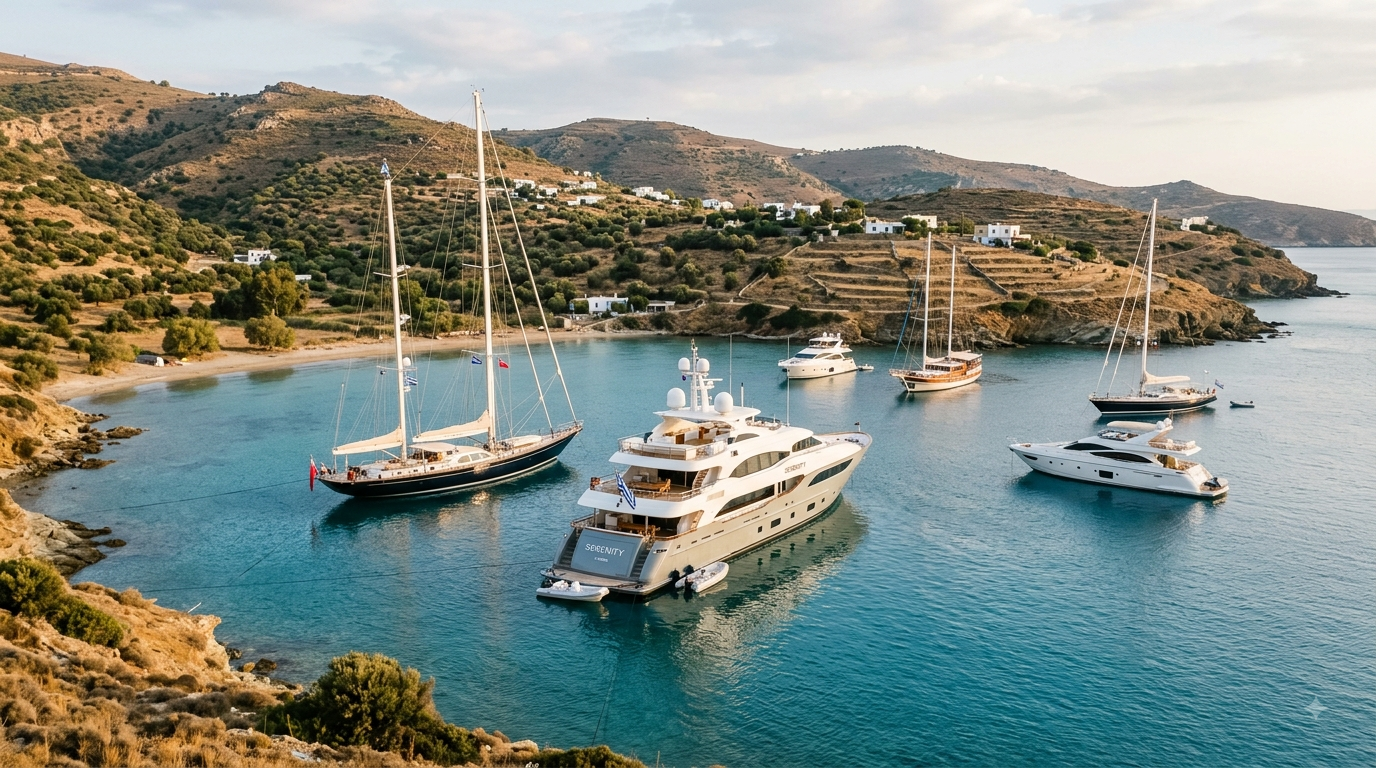
For a guest the meaning comes down to a little patience. Instead of chasing summer's loudest week, standing one step back; catching that narrow window when the sea is warm, the coves calm, the light long. To go once everyone has gone isn't really a privilege — it's just knowing the right time. The sea is there anyway; you simply share it with fewer people.
Once the last boats leave, the cove falls fully quiet. The water is still mild. Summer hasn't gone; it has only lowered its voice.
PRIVATE CHARTER →