No one notices when the breakfast table is cleared. A glass empties, and a few seconds later it's full again; no one says "may I", no one says "here you are". The plates seem to move on their own. But behind that motion is someone — watching you, without looking at you. The hardest part of a good crew's job is making you forget they're there at all.
It is the longest skill to learn. Longer than plotting a course, longer than tying a knot.
Between Closeness and Distance
On a week's charter, crew and guests live under the same roof like two families sharing a house — but the roles are clear, the boundaries invisible. A crew that keeps too much distance feels cold; a crew that comes too close robs a guest of the right to simply rest. The correct line isn't written in any book, and it can't be measured by a rule. A captain reads at the first dinner whether a family likes to joke, or whether another prefers quiet — and redraws that line all week, according to the guests this boat happens to have.
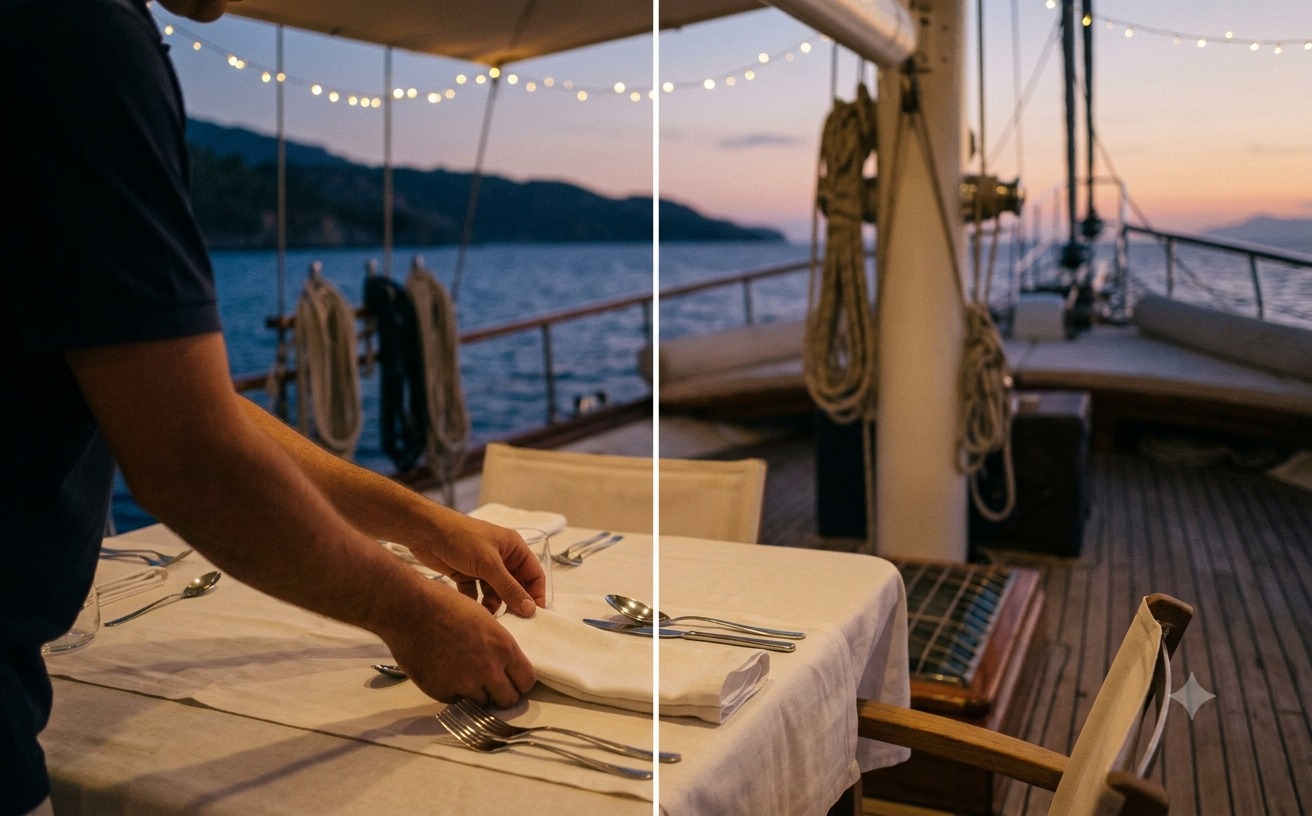
The Timing Inside Silence
An experienced crew reads out of the corner of their eye when a guest wants to talk and when they want to be left alone. When a glass gets refilled, when a towel gets changed, when the captain explains the route and when he stays quiet — all of it is an answer given before the question is asked. Good service isn't doing a great deal; it's doing exactly the right amount, at exactly the right moment. Too much unsettles. Too little feels like something's missing.
As dinner ends and the table is cleared, a guest often doesn't even notice where that line sat — they simply feel at ease. Perhaps that is the crew's greatest achievement: standing, unseen, behind a good week.
As the last lights go out, a single cup of tea sits steaming alone on deck. No one saw who brought it.
ROUTE DESIGN →