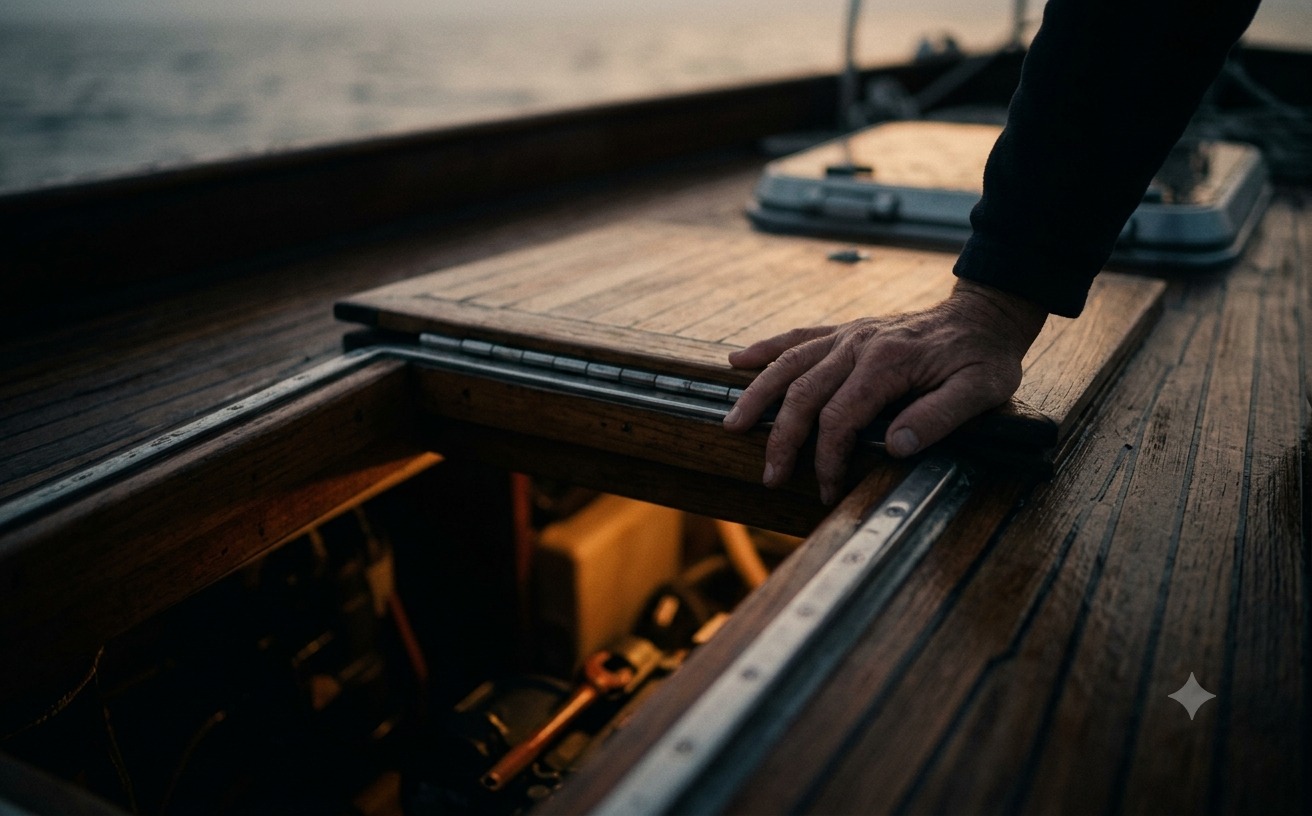
As the anchor comes up in the morning, the moment the engine first fires, a boat gives you its own voice. Those first few seconds — the slightly muffled, slightly stuttering rhythm of cold metal warming, then settling into a steady beat — tell an experienced captain more than a day's report ever could. Put your hand on the deck and you feel the vibration; a faint hum rising up through the soles of your feet. That is where a captain actually looks. Not the gauge.
Sound changes before the number does. That's the whole of the matter.
What the Gauge Doesn't Say
An engine's rev counter, oil pressure and temperature display matter, of course; but all of them warn with a delay — the problem may already have grown by the time they do. Sound is immediate. A crew that listens to the same engine at the same hour every day catches the smallest change in tone: a beat arriving a fraction early, an unexpected roughness in the exhaust note, a vibration at idle that's slightly harder than usual. None of these is a fault yet. But each is a question — and a good captain asks it before the gauges ever raise an alarm.
Every Boat Has Its Own Voice
Even two boats of the same model don't sound alike. An engine's sound reaches you filtered through that boat's hull, that day's load, the state of the sea — a little like a human voice, changing day to day but staying recognisable. When a new crew member joins a boat, this is what the first days are really for: what's normal for this boat? How much does she shake at idle, how hard does she work through a turn, at what revs does she settle? None of it is written in any manual. It's learned only by listening.
For a guest, what this means is invisible — and it should stay that way. If the crew listens to the engine a few extra seconds every morning, that isn't a delay; it's a habit. Good maintenance is usually not fixing a fault but noticing it before it ever grows.
Then the engine stopped. The sea calm, the sky clear. The captain nodded without a word — the sound today was the same as always.
YACHT MANAGEMENT →