In 1925, the writer Cevat Şakir Kabaağaçlı was put on a ship in Istanbul and sent into exile in a small Aegean town. At the time, Bodrum was little more than fishing boats and sponge divers, a forgotten corner of the country. The day he stepped ashore, neither he nor Bodrum knew how completely they were about to change each other's lives.
An Exile's Love Affair
When his sentence ended, Cevat Şakir did not leave Bodrum. He had grown so attached to the town's light, its sea, and its people that he chose a new identity for himself: the Fisherman of Halicarnassus. Halicarnassus was Bodrum's ancient name — the city of Herodotus, the city of the Mausoleum. And the Fisherman was now a man who spent his days at sea with sponge divers and fishermen, learning their language and writing down their stories.
His novels and essays revealed a side of the Aegean coast that literature had never shown before: the deep, often demanding relationship that ordinary people had with the sea. But his most lasting legacy was not a book — it was a habit.
The Birth of the Blue Voyage
By the late 1940s, a circle of writers, poets, and academics had gathered around the Fisherman of Halicarnassus. Setting off from Bodrum on a gulet, they began spending days at a time cruising the Aegean and Mediterranean coastline — with no fixed plan, moving from bay to bay wherever the wind, and their own curiosity, took them. They called these journeys the "Blue Voyage."
To take a holiday away from luxury hotels and crowded beaches, and return it to the sea, to silence, and to ancient shores — that was the essence of the Blue Voyage.
The idea spread quickly. The Blue Voyage became more than a way of traveling — it became a philosophy: slowness instead of speed, discovery instead of itinerary, a gulet instead of a hotel. The experience that guests from around the world now seek along Turkey's coasts traces its roots directly back to this small group's journeys some seventy years ago.
A Town's Identity
The Fisherman of Halicarnassus's influence reached far beyond literature and the Blue Voyage. It was his writing that first put Bodrum on Turkey's map — his accounts of the town's ancient heritage, its maritime culture and everyday life drew people who had never considered visiting this coast. Much of Bodrum's identity today as a town of artists and writers traces back to the years he spent here.
Bodrum never forgot him. A museum and a park carry his name, and his legend remains alive in the town's memory. The coast he arrived at as an exile gave him both a home and a legacy — and in return, he left it a word and a way of life still in use today: the Blue Voyage.
The Same Waters Today
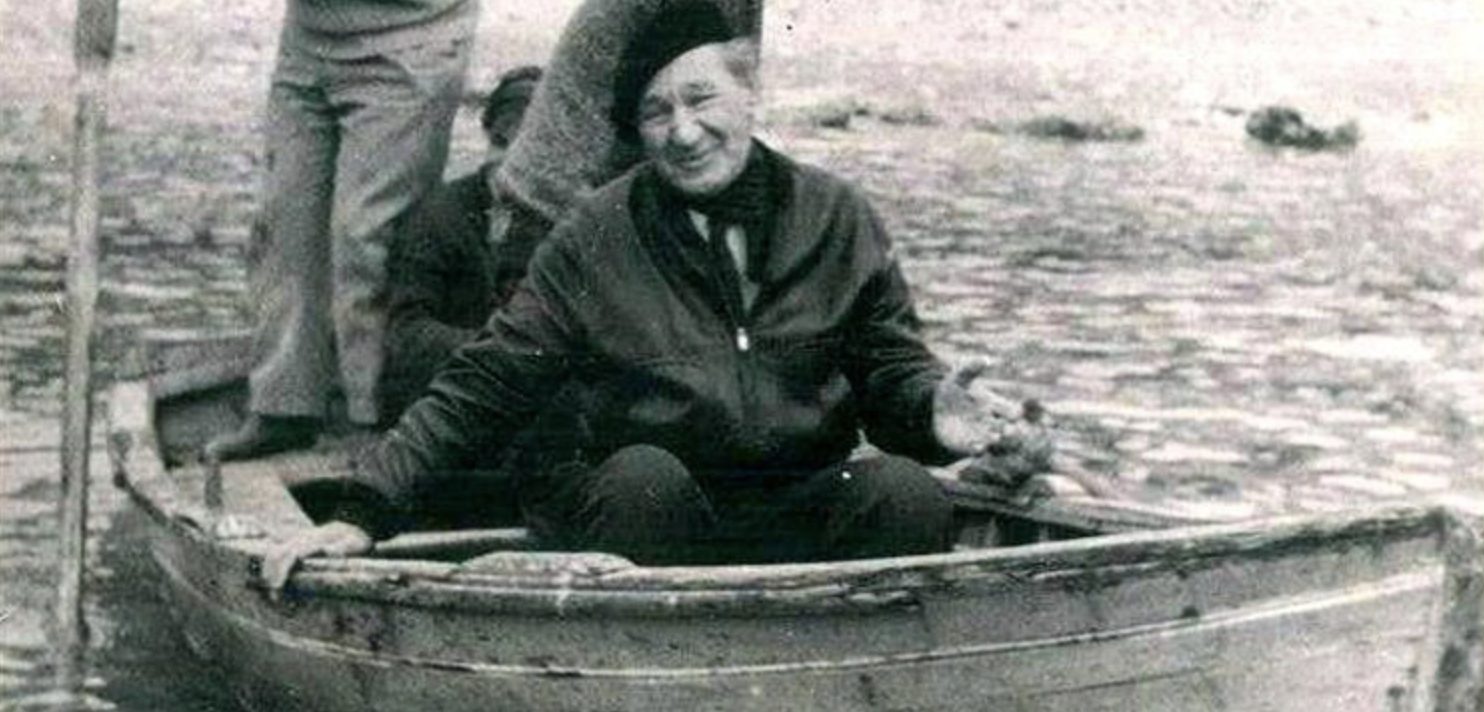
A gulet leaving Bodrum today may follow nearly the same routes the Fisherman of Halicarnassus charted decades ago — the quiet bays of Gökova, the almond groves of Datça, the ancient ruins of Knidos. The boats have changed, comfort has increased, but the spirit of that first Blue Voyage — a phone-free afternoon, a boat at anchor in a bay, and the simplicity the sea offers — still lives in these same waters.
PRIVATE CHARTER →