As your boat approaches an island, you hear it first: the clatter of plates, laughter, a bouzouki melody drifting from somewhere nearby. Then comes the smell — grilled octopus, olive oil, fresh basil. That small tavern right beside the harbor is the heart of the evening; sitting down there is not just eating, it is joining the island's daily rhythm.
Meze: A Table That Never Hurries
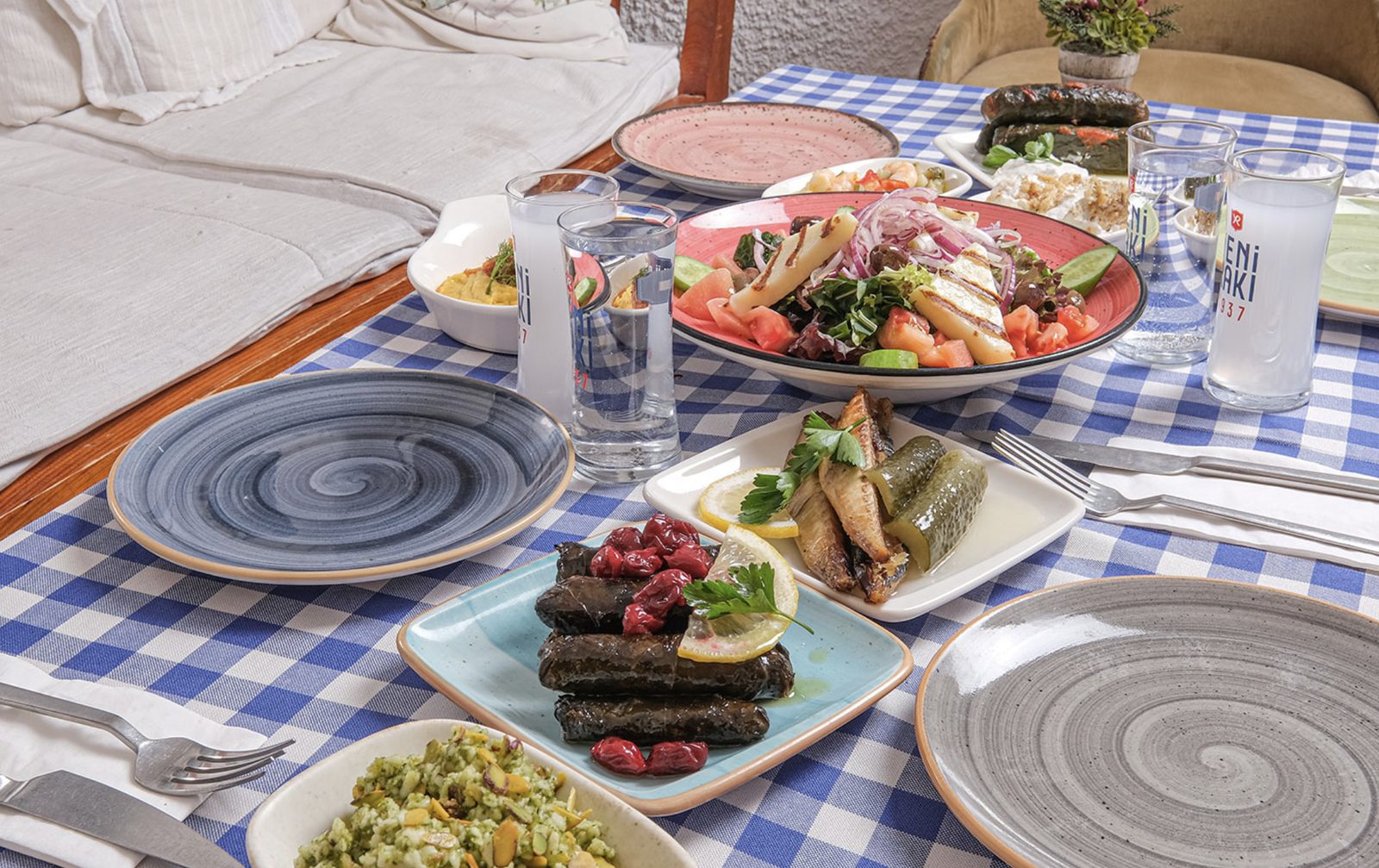
On the Greek islands, dinner is not built around a single main course but around a sequence of small plates. One arrives with olives and cheese, then comes grilled eggplant dip, stuffed vegetables, small fried fish, octopus. With each plate the table fills a little more, and the conversation opens a little wider. This arrangement is no accident — the point of the meal is not to be full, but to stretch out time.
Most harbor taverns are small, family-run places, and the menu changes with whatever the day's fisherman brought in. "What is there today?" is often more useful at these tables than the menu itself.
The Value of Being Near the Harbor
A good tavern sits within walking distance of the sea — because half its guests still arrive salty, and half still sun-flushed.
In harbors like Symi, Kos, and Patmos, taverns are often lined right along the waterfront, tables sometimes stretching onto the quay itself. This isn't just for the view — it's because the distance from the fishing boat to the table is at its shortest here. An octopus pulled from the sea an hour ago doesn't travel far before reaching your plate.
The Hour of the Evening
The real life of a tavern begins after the sun goes down. A small harbor that was full of daytime visitors transforms, by evening, into a table for locals: the fishermen have finished their last task of the day, shopkeepers have closed up, and everyone drifts toward one of the same few taverns. For a guest sitting down at this hour, the first thing they notice is how completely the pace changes — taking an order, the food arriving, asking for the bill: none of it is rushed.
Some taverns don't even have a written menu; the waiter comes to the table, lists what's available that day, and the guest chooses. This works in the visitor's favor even without a shared language — what's described is usually what's just come out of the kitchen.
From Boat to Table
For those cruising on a gulet or sailing yacht, these taverns are usually the day's final stop: a swim in a bay during the day, arriving at the harbor in the late afternoon, and a table at the island's tavern by night. Local wine, simple but flavorful meze, and service that is rarely in a hurry — this combination is the most natural way to close out a day at sea.
On a route through the Dodecanese, every harbor has its own tavern character: some are built entirely around fish, some offer a wide spread of meze, and some are just a handful of tables, almost like someone's family kitchen. This variety is as enjoyable as the route itself. Sitting at a different table in a different harbor every evening for a week — that may be the real flavor of cruising this corner of the Aegean.
FREE ROUTE GUIDE →